The French Merrell athlete has had the season of his life. Before one last showdown with Manuel Merillas at Sobrescobio, “Freddo” talks about orienteering, long seasons and why the counting starts after the finish line.
Frédéric Tranchand arrives in Asturias this weekend as the man in form. In 2026 the French Merrell athlete has won the OCC and the European Off-Road Running Championships trail title, and he heads to Sobrescobio as last year’s winner.
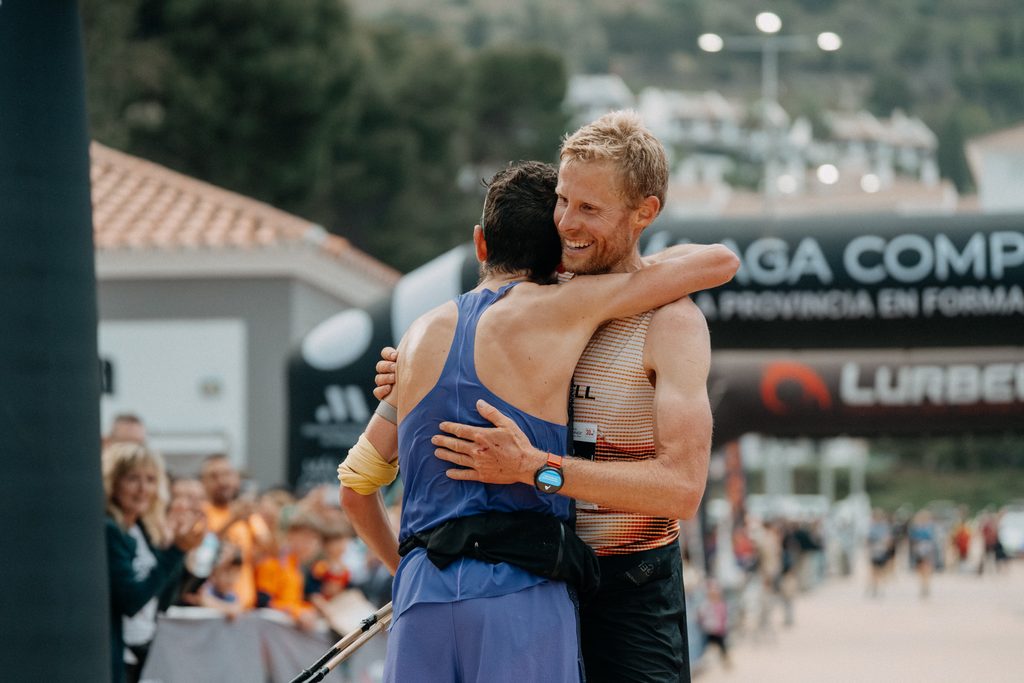
Waiting for him will be Manuel Merillas. The pair have produced some of the closest racing of the Merrell Skyrunner® World Series season, with Merillas edging Tranchand at both Acantilados del Norte and Calamorro. Sobrescobio is their last head-to-head before the SkyMasters final at the Marató dels Dements on November 7, and with the standings still wide open, every point counts.
A SEASON TO REMEMBER
Tranchand’s 2026 reads like a highlight reel. He won the SkyRace® des Matheysins in May, then claimed the European Off-Road Running Championships 52K trail title in June. He was second at the Marathon du Mont-Blanc 42K, and in August he won the OCC in Chamonix, becoming the first Frenchman to win the race in a decade. All this came a year after he was crowned short trail world champion in 2025.
So what changed? For Tranchand, it came down to stability.
“I’m very happy with my shape and the performances this year,” he says. “The biggest change for me has been being able to stay geographically much more stable than in previous years, especially during the spring and summer near Chamonix, where I could prepare really well for OCC, on site for many months.”
FROM THE FOREST TO THE RIDGELINE
Before skyrunning, Tranchand was an orienteer, and he still credits the sport for much of who he is.
“I grew up as a sportsman and as a person thanks to orienteering, and it has shaped my way of running, training and even thinking,” he says.
Orienteering, he explains, has two parts that experienced athletes manage while running at full speed. First comes planning: choosing the fastest route between two control points and the features you’ll need to spot along the way. Then comes navigation: following that plan through the terrain without anyone telling you where to go.
“We need to permanently look up, check the direction, look around, check the map and make our way through the terrain using small animal paths. This ability to read the terrain is useful in skyrunning.”
The two sports have taken him to very different places. Skyrunning offers spectacular ridgelines, while orienteering mostly happens deep in the forest. But he still misses one thing.
“The feeling of having control over your navigation, finding the flow and reaching each control point smoothly, is amazing. I can miss that.”
PLAYING THE LONG GAME
Balancing the Series with world championships and OCC takes planning. For the past two years, Tranchand has followed the same formula: a short winter base, an early start with skyraces in warm places, a long block of specific mountain training through the summer, then a late finish with the final Series races.
“The season is very long, but as I get a break in the middle to reload physically and mentally, it feels doable.”
That approach comes with risk. Tranchand sits fourth overall with just three races, while the three men ahead of him have run four or five. With only an athlete’s four best results plus the double-points final counting, he has no room for an off day.
“I usually say: let’s do the counting after the finish line,” he says. “I know I take a risk for the overall ranking by running ‘only’ the four races required plus the final, because I had other important goals this year. It means I don’t have any margin and need to perform well in every race. With Sobrescobio, I have good hope of rising in the standings, but the final ranking will be decided at the final. It’s a tough race, so a lot can happen!”
As for the SkyMasters, he won’t be racing the standings.
“As always, I will focus first on my own performance, the only one I can affect. I’ve had a couple of months away from competition to focus on the basics and training. After a long season where I’ve achieved big goals, I’m still motivated, so it would be nice to finish the season on top!”
IN HIS SHOES
Skyraces are so often won and lost on the way down, so how does he train for fast, technical descents? His answer is simple: “The best way to train for fast technical descents is to do fast technical descents.”
On his feet, Tranchand usually races in the Merrell Longsky 2.
“They are stable, precise and have good grip. For some races I’ve even used the Skyfire: an even lighter, more dynamic shoe, but a little less protective for longer distances and sharp stones. My everyday shoe is the Agility Peak 6. It’s very versatile, still precise, stable and grippy, and I use it for longer races as well.”
And the one piece of kit, apart from shoes, he’d never race without? “Socks and shorts?” he laughs.
There’s also a Series classic still missing from his list. “Trofeo Kima is a mythical race, and it would be cool to discover it, at least for my skyrunning culture.”
LOOKING AHEAD
Tranchand is encouraged by the growing number of young athletes in the sport, with the U23 Trofeo Esteban Olivero final also taking place at Sobrescobio this weekend.
“It’s a perfect way to start a skyrunning career: technical, spectacular, still rather short races, within a nice, friendly community of runners. The level seems higher every year, with more density. It’s nice to see, and motivating!”
His advice to his own 20-year-old self would suit any of them: “Don’t be shy. Don’t be afraid to be yourself and to go your own way, if you think it’s the best one.”
Next year, the plan is already taking shape. “In 2027, I’d like to defend my title at the World Trail Running Championships, and run some more classic races! Let’s see what fits around those two.”
First, though, there’s unfinished business in Asturias, and one more battle with Merillas.
Follow the Sobrescobio Skyrace on October 24–25 and the SkyMasters final on November 7.