Who Are the Best Skyrunners in the World Right Now?
The best skyrunners in the world combine climbing power, fearless descending, endurance and the judgement to race quickly across technical mountain terrain. In 2026, those qualities are being tested across the Merrell Skyrunner® World Series, from South American altitude to Asian jungle, European ridges and the steep slopes above Lake Cushman in the USA.
There is no single perfect way to rank athletes while the season is still in progress. Race wins show peak performance, while the overall standings reward athletes who perform consistently across different courses. This list therefore starts with the official 2026 Skyrunner World Series ranking and adds context from victories and recent results.
Standings and points in this article are correct as of 17 August 2026, after the first 12 races of the season. They will change as the remaining races are completed.
The Leading Skyrunners Right Now
| Men | Country | Points | Women | Country | Points |
| José Manuel Quispe | Peru | 578 | Amanda Nilsson | Sweden | 431 |
| Frédéric Tranchand | France | 363 | Patricia Pineda | Spain | 345 |
| Morgan Elliott | USA | 360 | Svetlana Nurmukhametova | Russia | 343 |
| Weston Hill | New Zealand | 326 | Rosalia Zegarra | Peru | 343 |
| Nicolás Molina | Spain | 306 | Oihana Zubillaga | Spain | 294 |
These are the current top five men and women in the official 2026 rankings. Points reflect the Series system and completed races at the time of publication.
Best Male Skyrunners in 2026
1. José Manuel Quispe – Peru
José Manuel Quispe is the clear leader of the men’s standings with 578 points. His season has combined victories, consistency and an exceptional ability to perform at altitude.
Quispe won the weather-shortened Ibarra Skyrace in Ecuador and then produced a dramatic victory at Cordillera Blanca in Peru. At almost 5,000 metres above sea level, he closed an early gap to José Luis Castro and used the technical descent to win by less than 20 seconds. The official race report described Cordillera Blanca as his fourth victory of the season.
He then finished second to Morgan Elliott at Beast of Big Creek, adding another major score rather than allowing a rare defeat to damage his championship campaign. Quispe’s combination of aggressive climbing, altitude tolerance and fast descending makes him the strongest all-round performer of the 2026 season so far.
Why he stands out: championship consistency, high-altitude strength and repeated wins across different South American courses.
2. Frédéric Tranchand – France
Frédéric Tranchand sits second with 363 points. His early-season performances established him as one of the fastest and most technically complete athletes in the Series.
After finishing second to Manuel Merillas at Acantilados del Norte and again at Calamorro, Tranchand turned consistency into victory at Skyrace des Matheysins. He made the decisive move in the technical Devil’s Garden section and then controlled the remainder of the course to win in 2:19:59.
Tranchand is particularly dangerous on courses that combine sustained climbing with fast, technical running. His ability to stay near the front across several contrasting French and Spanish races explains why he remains high in the overall ranking despite not racing every stop.
Why he stands out: technical efficiency, reliable podium finishes and the ability to make decisive moves on complex terrain.
3. Morgan Elliott – USA
Morgan Elliott is third with 360 points and arrives in the second half of the season after one of its most convincing victories.
At Beast of Big Creek, Elliott controlled the race from the front on the slopes of Mount Ellinor. José Manuel Quispe reduced the gap on the climbs, but Elliott separated decisively on the descent and won in 2:05:27.7. The result showed that he can convert climbing strength into victory through confident technical descending.
Elliott has also collected points across South American and Asian races, making him more than a specialist on home terrain. With only three points separating him from Tranchand as of 17 August, the fight for second is extremely close.
Why he stands out: downhill speed, front-running confidence and strong results across multiple continents.
4. Weston Hill – New Zealand
Weston Hill holds fourth with 326 points. His position has been built through consistent results rather than a single dominant performance.
Hill scored strongly at the opening South American races, added another valuable result in the heat and humidity of Penang, and then performed at high altitude in Yading. That range matters in a global championship where courses can change from fast and dry to humid, steep or oxygen-deprived.
Consistency is often overlooked when individual victories create the headlines. Hill’s ranking shows the value of being competitive across environments and keeping a season intact.
Why he stands out: versatility, regular scoring and the ability to adapt to very different mountain conditions.
5. Nicolás Molina – Spain
Nicolás Molina is fifth with 306 points and has already delivered two of the strongest winning performances of the year.
At Penang Skyrace, he took control around kilometre 10 and stayed clear as heat and humidity affected the field. One week later at the rain-soaked Ueda Skyrace, Molina made his decisive move on a steep climb, extended the gap across the technical ridge and won by ten minutes.
Winning in tropical heat and then on wet, slippery Japanese terrain demonstrates unusual adaptability. Molina has fewer scoring races than some rivals above him, but his peak performances place him firmly among the world’s best current skyrunners.
Why he stands out: back-to-back wins, decisive climbing attacks and control in extreme conditions.
Best Female Skyrunners in 2026
1. Amanda Nilsson – Sweden
Amanda Nilsson leads the women’s standings with 431 points. Her season has combined commanding victories with strong results across several types of course.
Nilsson delivered a controlled wire-to-wire performance at the Ueda Skyrace, remaining composed on a wet and slippery 27 km course with 3,000 metres of climbing. She then won again at Ibarra, leading from the opening stages as extreme weather forced organisers to shorten the high-altitude route.
She also finished third at Cordillera Blanca and has continued to accumulate points when not winning. That ability to score across technical, wet and high-altitude races gives her the most complete women’s campaign so far.
Why she stands out: two authoritative wins, technical control and the strongest overall points total.
2. Patricia Pineda – Spain
Patricia Pineda is second with 345 points and remains one of the most reliable winners and podium contenders in international skyrunning.
Her headline result came at Gorges du Tarn, where she secured a second consecutive Series victory after an intense duel with Eva Delafosse and Alice Bausseron. Pineda’s racecraft on technical terrain allowed her to turn a close contest into another win.
She has also scored strongly in the early part of the season, including a second-place finish at Acantilados del Norte. Pineda’s combination of speed, experience and consistency keeps her in the championship fight.
Why she stands out: proven winning ability, smart racing and repeated high finishes on technical European courses.
3. Svetlana Nurmukhametova – Russia
Svetlana Nurmukhametova is third with 343 points, level with Rosalia Zegarra but placed ahead in the current ranking.
Her Penang victory was one of the most dramatic finishes of the year. After Elena Karanfiloska led for most of the race, Nurmukhametova closed the gap and passed her only metres before the line, winning by three seconds. At Yading, there was no need for a late sprint: she controlled the race from the start and won at 4,735 metres above sea level.
The contrast between those victories shows both tactical patience and front-running strength. She can wait, chase and strike late, or take command in extreme altitude.
Why she stands out: victories in tropical and high-altitude conditions, plus the composure to win very different race scenarios.
4. Rosalia Zegarra – Peru
Rosalia Zegarra also has 343 points and has built her position through a broad, consistent campaign.
She scored heavily at the opening races in South America and took third at Ibarra after a close battle behind Amanda Nilsson. Further points at Cordillera Blanca and other Andean events have kept her close to the championship leaders.
Zegarra’s season demonstrates the value of repeated strong performances. She has remained competitive at altitude and collected points even when other athletes have produced individual race wins.
Why she stands out: consistency, experience in Andean conditions and a points total level with the third-ranked athlete.
5. Oihana Zubillaga – Spain
Oihana Zubillaga is fifth with 294 points. She has scored across several Spanish, French and South American races, making her another athlete whose ranking reflects range and durability.
At Ibarra she formed part of the close chasing group behind Nilsson, while earlier results at Acantilados del Norte, Calamorro and Skyrace des Matheysins built a strong points base. Her ability to stay near the front across repeated races has kept her inside the top five.
Why she stands out: consistent scoring, a varied international programme and competitive performances across multiple terrain types.
Other Skyrunners to Watch
The overall standings are only one view of current form. Several athletes outside the top five have delivered performances that could shape the rest of the season.
Sara Alonso
Sara Alonso won both Acantilados del Norte and Calamorro, setting a course record at Acantilados and leading from the start at Calamorro. With 250 points from only two races, her strike rate is exceptional.
Eve Pannone
Eve Pannone won the women’s race at Beast of Big Creek in 2:32:50.9 after leading throughout. The result lifted her into the current top ten and confirmed her ability on steep, technical North American terrain.
Manuel Merillas
Manuel Merillas won Acantilados del Norte and then defeated Frédéric Tranchand again at Calamorro after a race-long duel. Like Alonso, he has 250 points from two victories and remains a major threat whenever he starts.
Tom Spencer
The British U23 star sits sixth in the men’s standings with 287 points. He finished third at Calamorro and second at Gorges du Tarn, only 20 seconds behind winner Baptiste Massot. His performances show that the next generation is already competing for senior podiums.
Kalie McCrystal
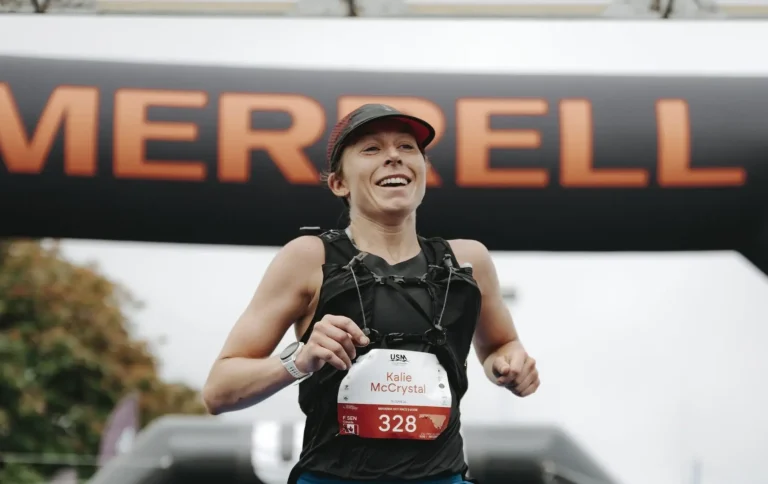
Kalie McCrystal is sixth in the women’s ranking with 260 points. She won the opening Cuatro Refugios race and has continued to score across a demanding international schedule, including a fifth-place finish at Beast of Big Creek.
What Makes a World-Class Skyrunner?
The current leaders have different strengths, but several qualities appear repeatedly.
Climbing power
Elite skyrunners can sustain a high output on long climbs and switch efficiently between running and power-hiking when the gradient changes.
Technical descending
Many 2026 races have been decided on the descent. Elliott separated from Quispe at Beast of Big Creek, while Quispe used his downhill speed to win at Cordillera Blanca.
Adaptability
The Series moves through heat, humidity, mud, altitude, wind and exposed alpine terrain. Athletes who perform across several environments gain a major advantage.
Race judgement
The fastest early runner does not always win. Nurmukhametova’s late pass at Penang and Pineda’s ability to finish close battles show the importance of timing and control.
Consistency
Overall titles reward more than one perfect day. Nilsson, Quispe, Hill, Zegarra and Zubillaga have all built their rankings by collecting points across multiple races.
How the 2026 Ranking Works
Athletes earn points at each Skyrunner World Series race, with enhanced points available at designated RED races. The overall championship rewards performances across the season, while eligibility for the end-of-season bonus pool requires athletes to complete at least four races and the SkyMasters final.
The SkyMasters is not a standard open race. Athletes qualify through Series results or specified National Series and championship routes. The final can therefore change the championship picture even after months of racing.
See the official Series rules for the complete scoring and qualification system.
Frequently Asked Questions
Who is the number one male skyrunner right now?
As of 17 August 2026, José Manuel Quispe leads the men’s Skyrunner World Series ranking with 578 points.
Who is the number one female skyrunner right now?
As of 17 August 2026, Amanda Nilsson leads the women’s ranking with 431 points.
Are the Series leaders automatically the best technical runners?
Not necessarily. The standings reward results across the season, while an athlete with fewer starts may have an exceptional win rate or a specialist advantage on certain terrain. The ranking remains the clearest current championship measure, but race wins add useful context.
Who won the 2025 Skyrunner World Series?
Luca Del Pero won the 2025 men’s overall title, while Anastasia Rubtsova won the women’s championship for the second consecutive year.
Where can I follow the current standings?
The live men’s and women’s tables are available on the Skyrunner World Series ranking page. Athlete profiles and career information can also be found on the Top Skyrunners page.
The Championship Is Still Open
Quispe and Nilsson have created clear leads, but the 2026 season is not finished. Matterhorn Ultraks Extreme, Trofeo Kima, Maga Skymarathon, Gorbeia Suzien, Mt. Kinabalu International Climbathon and the SkyMasters final will continue to test the world’s best across very different terrain.
Rankings can move quickly when RED-race points and the season final come into play. For the latest position, check the official standings and follow the Skyrunner World Series news for race reports and results.