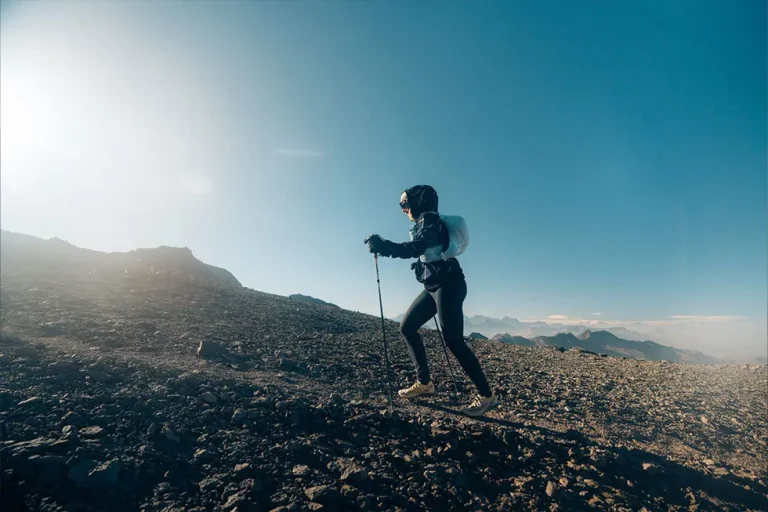
Skyrunning is defined by its altitude, vertical gain, and technical terrain, but what truly separates it from road or trail running is the way weather and mountain conditions shape every race. Unlike predictable city marathons, skyraces demand that athletes prepare for blazing sun, sudden storms, freezing wind, or fog that drops visibility to arm’s length.
This guide gives you the science, systems, and strategies to be race-ready in any condition.
Reading the Mountains: Weather Awareness
Mountain Weather Basics
- Microclimates matter: A valley may be calm while the ridgeline above is lashed with 60 mph gusts.
- Diurnal cycles: Clear mornings often give way to afternoon storms in summer mountain ranges (e.g., Rockies, Alps, Pyrenees).
Key Warning Signs on Course
- Cloud towers (cumulonimbus)- storms developing.
- Sudden wind shift and temperature drop- front moving in.
- Rising fog/low cloud- visibility hazards ahead.
Training tip: On long training runs, pause every hour and describe the sky and wind out loud. Build a habit of reading your environment.
The Layering System
The goal is thermoregulation: keeping your core temperature stable while shedding or trapping heat as needed.
- Base Layer: Synthetic or merino wool, never cotton. Wicks sweat and prevents chill.
- Mid Layer: Light insulation, thin fleece or merino. Essential for exposed ridgelines.
- Shell Layer: Waterproof/windproof jacket (minimum 10k mm waterproofing; taped seams preferred).
- Accessories: Gloves, buff, and a light hat take almost no space but provide major comfort.
Source: Castellani & Young (Sports Medicine, 2002) showed that proper clothing systems significantly reduce hypothermia and frostbite risk in endurance athletes.
Training tip: Always test your full kit in training runs. Don’t wait until race day to learn that your jacket doesn’t breathe well or your gloves can’t handle wet cold.
Hydration & Fueling in Variable Conditions
Cold Conditions
- Thirst drive decreases, but sweat loss remains. Set a 15-20 min fluid schedule.
- Warm fluids (tea or broth) can improve morale and prevent chills.
Hot Conditions
- Sweat rate and sodium loss spike. Use electrolytes every 30-45 min.
- Clothing: light colors, arm sleeves, sunscreen.
Altitude Conditions
- Every 1,000 m gain increases respiratory water loss by 10%.
- Even if cool, you’ll dehydrate faster, sip consistently.
Source: Sawka et al. (Journal of Applied Physiology, 2007) confirmed dehydration at altitude accelerates fatigue and impairs cognitive function, dangerous when navigating technical terrain.
Mountain Hazards & Safety
Thunder & Lightning Strategy for Skyrunners on Exposed Terrain
Lightning is one of the most serious risks in skyrunning. At altitude and on ridgelines, athletes are often the tallest objects, making them vulnerable. While the best option is always early avoidance (descending before storms build), sometimes weather changes faster than your ability to retreat. Here are a few strategies if you get caught in the storm:
Immediate Assessment
- Time between flash and thunder:
- Less than 30 seconds means the storm is within 10 km and you are in a high-risk situation.
- Identify escape options quickly:
- Scan for routes down to tree line, saddles, or gullies that are safer than staying exposed.
- If retreat is impossible, minimize exposure with the following tips:
Positioning on ridgelines or exposed terrain
- Avoid summits, peaks, and outcrops: Don’t stand on the highest point.
- Stay away from lone features: Isolated trees, poles, or boulders attract strikes.
- Move lower if possible: Even 20-50 meters below the crest reduces exposure.
- Spread out if in a group: Keep 20-30 feet (6-10 m) apart so one strike doesn’t affect everyone.
Lightning Safety Position
If you cannot descend:
- Crouch low on the balls of your feet with heels together.
- Arms wrapped around knees, head tucked in—make yourself compact.
- Minimize ground contact (don’t lie flat). This reduces the “step potential” (current traveling across the ground).
- Stand on insulating material if available: backpack (without metal frame), dry clothing, or shoes can slightly reduce conduction.
Equipment & Conductivity
- Poles: Lay them flat at least 10 M or 30 feet away, never upright.
- Metal objects: Keep distance between yourself and metal gear
- Electronics: Turn off or stow phones and watches, not because they “attract” lightning, but to minimize sparks or burns if hit.
While the Storm Passes
- Stay alert to thunder intervals:
- Risk reduces once the flash-to-thunder gap is greater than 30 seconds.
- Stay low but mobile: If a safe descent route becomes visible, move quickly between crouch intervals.
- Do not shelter under overhangs or shallow caves: They can conduct and arc electricity.
Mental Strategy
- Breath Control: Inhale through the nose, exhale long and slow, this keeps panic from impairing decision-making.
- Focus on immediate actions: “Stay low, stay separate, stay small.”
- Accept temporary stillness: Sometimes pausing in safety position for 10–15 minutes is better than panicked movement on an electrified ridge.
Snow & Ice
- Early season races may require micros pikes or light crampons.
- Trekking poles aid balance and reduce eccentric loading.
Heat & Exposure
- UV intensity increases 10-12% per 1,000 m elevation gain.
- Apply sunscreen before the race
Mental Readiness: Staying Calm in Chaos
Skyrunning is as much a mental game as a physical one.
- Visualization: Before race day, picture yourself handling sudden storms, icy traverses, or heat exposure. Train your nervous system to adapt.
- Breath Control: Use box breathing (inhale 4, hold 4, exhale 4, hold 4) when anxiety spikes. Calms the sympathetic response.
- Acceptance Mindset: Weather is not the enemy; it’s part of the challenge. Athletes who accept it, rather than fight it, waste less energy.
The Athlete’s Golden Rule
“Respect the mountains.”
No podium or PR is worth ignoring storm warnings, pushing through hypothermia, or risking lightning exposure. The best skyrunners know when to back off and that decision is a mark of strength, not weakness.
When you step onto a SkyRace start line, you’re not just racing other athletes, you’re racing the environment itself. By training in unpredictable conditions, testing your kit, fueling smart, and staying mentally calm, you give yourself the best chance to thrive no matter what the mountains throw at you.